Wednesday, December 23, 2009

Hawaii: Extra Day in O'ahu!

the large waves that provided us an extra day in Hawaii :)

surf competition at North Shore beaches!

probably a big name... 

9-Time World Champion... Kelly Slater!

check out that little surfer dude... then check out the huge waves!!!

Hawaii: The Big Island


Hilo

waves!

Volcanoes National Park... a crater

dried lava in a crater

the group! standing on dried lava!

lava tunnels... where lava once flowed!

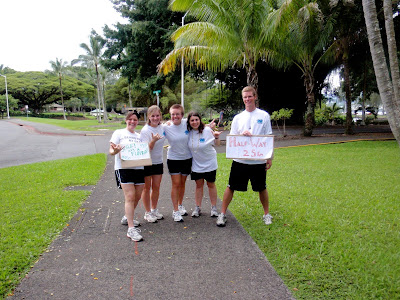
SAS's 5K for the $100 Solution!
1st mile: for water in India!


SAS $100 Solution 5K!

Hawaii: O'ahu Island

U.S.S. Arizona peaking out of the water
Pearl Harbor Memorial


Hula Workshop!


Getting ready to JUMP OUT OF A PLANE!!!


SKY-DIVING IN HAWAII!!!!!!!


out smooth landing

Japanese Home Stay

my absolutely wonderful host family in Japan


MV Explorer in Kobe, Japan


trying to help cook with Yuko... TRYING lol

Yuko and Hiroshi's beautiful jazz duet and So laughing on the side


tour of a tea house


Backpacking through Japan

Kyoto


Kyoto Buddha as a peace memorial for those that died in WWII


Autumn in Kyoto


Geisha in Kyoto


gardens


Tokyo fish market


1 of the 5 lakes beside Mt. Fuji


Mount Fuji!


me excited to see Mount Fuji!!!


Tokyo... I may be a bit underdressed :)


Shanghai, China

view of the city from my porthole


gardens in a park in the city


gardens


the old city streets.... view from... a Dairy Queen :)

Hong Kong, P.R.C.

Botanical and Zoological Gardens in center of city


View of Hong Kong Island from Kowloon Island at night


Giant Buddha with friends on Lantau Island


pulling into Hong Kong during sunrise

Thursday, December 10, 2009

Aloha, Hawaii!


(more pictures below!)

Hawaii… 8 islands of mountains, volcanoes, white sand beaches, clear ocean water, hula dancing, and big-wave surfing! And for my usual country random facts: The islands were first discovered by Polynesians 2,000 years ago and then the Tahitians 900 years ago. Hawaii became the U.S.’s 50th state in 1959, just 50 years ago. The Hawaiian alphabet consists of 13 letters, 5 vowels and 8 consonants. Pineapples are in fact NOT native to Hawaii. It is believed that if you take lava or rocks away you will be cursed until you send it back!

Hawaii was a great final port for me. It eased us back into the United States’ culture, but was still quite different. I found myself still trying to convert prices even though the American dollar is used. My mind was trying to figure out what side of the road is correct to drive on. I think I finally figured it out! When I would ask locals a question, I found myself first wanting to say, “Do you speak English?” The bus systems spoke English right away and signs were in English. There were so many restaurants I knew and free shuttles to Wal-mart! The biggest “reverse culture shock” was turning on my phone! It hadn’t been turned on since August but I remembered how to use it! Haha. I could talk to my family and friends and actually send them pictures of what I was seeing! I’ll admit though, it was weird having it on. I really enjoyed my 4-month long break from phones and internet. It forces real communication and makes you focus on what is directly in front of you rather than these technological distractions. Hawaii was a good ease back into familiarity while still holding a foreign culture.

We pulled into Honolulu on O’ahu Island at 6:00 am Friday morning. I went to breakfast as we were waiting for the ship to be cleared and EVERYONE was on their phones! It was a sight that literally has not been seen on this ship thus far! As soon as the ship was cleared my friends and I headed off to find our bus stop. The bus system in Hawaii is great. It costs $2.25 to go anywhere on the islands and stops at many visited places. We rode it to the Pearl Harbor memorial, right in the Pearl Harbor Bay where it was attacked about 68 years ago. We watched a movie that explained what led into the attack and then the attack itself. As we watched it, us SASers realized the route we had just traveled on ship from Japan to Hawaii was the same route the Japanese took 68 years ago leading into the Pearl Harbor attack. That was a bit eerie. We were also at the memorial 3 days before the anniversary of the attack. After the movie we took a boat ride across to a building in the middle of the water. It sits over the U.S.S. Arizona, the largest ship shot down in the attack. About 1,000 people went down with it and many still remain uncovered. Parts of the ship peaked out of the water and the top layer could be seen just a few feet below the surface. Bright colors of oil rested at the top from 400,000 tons that are still in the ship. We took the boat ride back and the reality of the attack hit me. 2,000 people died just in that single day. It was strange… I had been in Vietnam, Japan, Hawaii… so many places of war… yet I was just a smiling tourist traveling around. Such different memories and emotions each country holds for different people.

That afternoon I went to a Hula workshop in Waikiki! The dance is actually more difficult and precise than it appears! Hula dancers keep their legs bent the whole time, so those thighs really get a work-out! The reason hula dancers move their hips back and forth is to mimic the waves. It is the same with the hands. There are a few different types of hula dancing depending on the island and people. I really enjoyed learning hula moves in this workshop!

That evening we looked around an international market and walked through the streets of Waikiki. Then we had the most beautiful walk along the ocean. I couldn’t believe how clear the water was—even when it was dark! The sand felt SO wonderful on my feet. We just sat and stared out at it for awhile. I was so happy in this moment… I was with some of my favorite people from the trip, sitting on a beach in Hawaii, after seeing so many parts of the world. It was just truly amazing to look at the realities of what is happening… and what has happened. For a late dinner we ate at a local restaurant called Dukes. It was named after the first surfer that made the sport huge world-wide. I had the most delicious Hawaiian pizza with pesto sauce, bacon, and pineapple. For dessert we treated ourselves with amazing ice cream from Baskin Robbins… oh the things you miss from the U.S. ☺ Although the bus system is handy in Hawaii, it’s also not very dependable… so we waited at the bus stop for about an hour until our bus came. But it got us back to our ship nice and safely after a very wonderful day in Pearl Harbor, Honolulu, and Waikiki.

Now, Saturday is one of my favorite days ever… I WENT SKY-DIVING!!!! Yeah- you read that right! I jumped out of a plane and free-felled towards the earth and loved every second of it!

It started very early in the morning with 8 of us. A bus picked us up outside our port and we drove about an hour to the north side of the O’ahu Island. We signed papers that clearly warned us of how dangerous sky-diving is… on the bottom of each of the 8 pages said in big bold letters, “WARNING: YOU MAY BE INJURED OR DIE!” I know I know… but my tandem instructor doesn’t want to die either… and the skydive company has obviously been in good business… so the chances of that happening are slim… heh… ☺ While we waited for our turn we watched many others land… oh man, the landings. Some landed gracefully on two feet. Some ski-ed across the grass on their butts. Some slid forward and took a mouthful of grass. Others landed too soon and their instructor toppled over them. Note to self: carefully do as the instructor says!

Then it was finally our turn to go up! I met my instructor and I got all harnessed up. The only directions I was given was how to jump out of the plane: bend your legs, tilt your head back, arch your back, and smile at the camera! Haha. We hopped on the back of a truck that took us to our plane. It had just refueled—sweet! We all piled tightly in the small airplane- 4 SASers, 4 tandem instructors, 4 photographers, and 1 pilot… and up we went! We flew upward for 15 minutes with the most spectacular view! Oh the island was GORGEOUS! Mountains, ocean, waves, and I could even see to the other side of the island! After we got to 14,000 ft it was time to JUMP! I was the first to jump… oh boy. But I was SO excited, hardly any nerves at all! We stood there in the door of the plane, knees bent, head tilted backward, and all smiles. Then I JUMPED!!! And down we free-fell 4,000 ft for 50 seconds at 120 mph! Oh, I LOOOOOVED it! It was like I was flying (or more like failing to fly lol) with my arms spread wide feeling the freedom! The air was strong so my face made goofy expressions. Oh, the view was just incredible, just incredible. Then the parachute was pulled and we were jerked around until the chute got smoothed out. We peacefully glided around, twirled, and enjoyed the amazing scenery. When we were about 30 seconds from landing, my instructor finally told me how we were going to land… haha. We approached the ground, I stuck out my feet, he touched ground, he told me to stand, I stood, and we barely had to run! It was honestly a perfect landing! No mouthfuls of grass, no butt-skiing, and no injuries! Oh, sky-diving was just soooo great! I was ready to go do it again! Haha. I really do want to do it again… possibly multiple times. Skydiving is just AMAZING! I would highly recommend it for anyone who loves heights and a thrill. I’d also recommend you do it somewhere with beautiful scenery. Skydiving itself is fun, but if you add on a beautiful place, it’s a breathtaking experience!

We were sailing to the big island overnight so we had to be back on the ship by 5:00 pm. So when I got back I spent some time walking around Honolulu, viewing the waterfront, and enjoying the Christmas decorations.

That night on the ship I went to the last get-together for the Life Long Learners because some of them were leaving in Hilo, including two that I had worked quite a bit with ☹ and then had hip-hop dancing (which I’m REALLY loving).

We pulled into Hilo on the Big Island at 8:00 am on Sunday morning. The Big Island is less populated and has volcanoes and craters. A group of us spent the day at Volcanoes National Park. We first drove around the perimeters, but we ran into a roadblock… turns out that 2/3 of the park was closed due to the lava emitting toxins. Also turns out that this happens more often than it doesn’t happen. We were still able to hike an amazing route though. We walked through the Hawaiian jungles that first went on the perimeters of a crater and then we went down into it. We walked over a HUGE area in the crater that was purely hardened lava. It was just amazing. You could see where the lava had folded, then hardened, and broken into huge pieces. There were also deep cracks where hot steam came out of from the lava underneath. It is often rainy/steamy/foggy around this park because of all the heat underneath. After hiking through the crater, we walked into a Hawaiian rain forest- amazing! This led us to lava tunnels—caves where lava had once flowed. It was just incredible to think that huge lava streams used to flow through where we were walking. We then hiked the perimeters of the crater back. By this time I was soaked. I gave up on being dry and instead embraced the rain ☺

We stopped at a beach on our way back. You need to realize though that there are no natural sand beaches on the Big Island. They are all hardened lava rocks, which creates such a beautiful shoreline. We stopped at one for a while and just enjoyed the view. That night we found some food and a live jazz club. These couples were just dancing away to the music! Then we found a lava rock beach and took in our last night in port. Huge waves crashed on the rocks around us and I sat with my favorite people from the voyage. I couldn’t have asked for a better last (ish) night.

Monday we decided to explore Hilo. We looked in some shops, walked the streets, viewed an art gallery, walked through a farmer’s market, and hung out in a park. We also went to a kava restaurant. Kava is a root that is made into a tea drink. It has a very relaxing effect. We then walked along the beach and got some shaved ice, the real Hawaiian good stuff.

That afternoon SAS put on a 5K Fun Run to raise money for the $100 Solution in Ghana, India, Vietnam, and Hong Kong. I have never loved a 5K so much… because it was so personal to me. I have such a strong attachment now to each of these places, particularly the needs of these places. 300 people from SAS participated, that’s more than half! It was on the last day for a conclusion of our voyage… to always remember those around the world that are in desperate need for just the basics in life. To always remember how easy it is for us to improve the quality of life for another human being. The purpose of the 5K is what is most dear to my heart from my voyage around the world.

The last moments on the Big Island were spent at a nearby hidden beach. Again we just sat along the rocks, watched the crashing waves, and took in the moments. It was so peaceful, but very emotional. I can’t believe this journey is almost over. I can’t believe these 11 countries I once hardly knew I now have experienced and know pretty well. I can’t believe my long anticipated semester is nearly finished. I can’t believe that I will no longer be walking on foreign ground. But I do know this… my travels are not finished, they have only begun. Traveling and learning cultures has become an addiction… it has become a part of my being. Every place I visit from now on will be a “port”… as I will so graciously take it in and let it change me. I’m not saying goodbye to a journey, I am welcoming in a new way of life.

I climbed back up those 3 flights of gangway one last time, had dinner, and awaited our disembarkation. Then we got an announcement of a community-wide meeting for an itinerary change. We all met together and a surprise was announced. The seas were incredibly rough and would be dangerous to sail on. The captain wanted to avoid the storm, but thought maneuvering around it would be too difficult… so… we were going to sail back up to Honolulu and have a free day there! The room broke out in hootings and hollerings! What a surprise! Originally Tuesday was going to be a Study Day on the ship because Wednesday was a finals day. Originally they weren’t going to let us off the ship so we would study, but they decided that we were mature adults that could make our own decisions. So that last day wasn’t a last day… I still had another day in Hawaii!

Tuesday we woke up to pulling back into a port that was quite familiar… Welcome back to Honolulu and O’ahu Island! Once the ship was cleared my friends and I made our way to a bus stop. The bus took about 2 hours, but it was along a very scenic view of the island: mountains, ocean, and beaches! And I brought homework along and was quite productive on that bus ride ☺ We then arrived at North Shore- a very beachy area where Triple Crown Surf Competition was being held! This is a BIG competition, especially this particular day! The waves were 40-50 ft tall, the highest they’ve been in 6 years! We found ourselves a nice seat along the sandy shore and watched the surfers attempt these huge waves. They looked so tiny in those monstrous waves! There were some big names there too- like Kelly Slater who is a 9-time World Champion Surfer! It was a beautiful day out, and I REALLY enjoyed the fact that we had an extended day in Hawaii so we could watch this big surfing competition! After a few hour-long heats we made our way back to the bus stop and rode the bus 3 hours back to the ship. Yes, I was academically productive on the bus ride again ☺.

I got some studying and paper-writing done… and hip-hopped danced as well. We’re working on a routine for the end of the voyage and are learning some sweet stuff. We meet every night we’re on ship and I am loving this group. We did not pull out of Hawaii that night. It was up to the Captain’s discretion of when would be the safest. So I woke up this morning (Wednesday) to still being in Hawaii! Sadly though it was a finals day and we weren’t allowed to leave the ship. So I took 2 of my finals and am feeling pretty good about them, despite spending the day before in Hawaii at a surf competition. We pulled out of the port around 4:00 pm and I sat in my porthole typing this post. I can still see the Hawaiian mountains far in the distance. The next 5 days consist of: a study day, another finals day, reflection/re-entry programs, the Ambassador’s Ball (dance), convocation, and arriving in San Diego. I’m sure they’ll be filled with many emotions, laughs, and tears from everyone.

So how am I doing right now? At this moment I’m very excited. I’m excited to see my family and friends who I’ve really missed. I’m excited to spend these last 5 days with my SAS friends that I’ve come to love (and finish classes…). And I’m excited about these past 4 months… how they’ve changed me… how they’ve shaped me. In a way it’s a blessing that we had an additional day in Hawaii. That last (or what I thought was my last) walk on the ship in Hilo was quite a downer… I was incredibly sad this was all over. But then, SURPRISE!, one more day in port! But isn’t that how life goes? It’s not worth getting too sad over, there’s always a next stop, more excitement, and more life-changing experiences. I expect to visit more ports, more countries, more cultures. My voyage isn’t ending… this was just an introduction to my travels.

Alright, despite my optimistic view right now, I know I am bound to have some difficult emotions these last 5 days. I guess some prayers might be good to ask for. I’m not sure if I will have time to post again before I disembark the MV Explorer, so the next time I post I may be home. I can’t wait to see you all. It means a lot that you’ve kept up with my travels. Friends are really all you need to get by in life, and I’ve been overly blessed with quality friends and family. So cheers to these next 5 days… and I’m looking forward to seeing you all SOON! ☺


Friday, December 4, 2009

Sailing Across the Pacific Ocean

The MV Explorer! Our first spotting of it at 7 am in Kobe (Japan).


MY HOST FAMILY in Japan!!! Such a great experience!


ME AND MOUNT FUJI!!!!

This first one is a panoramic view of our sunrise entrance into HONG KONG... so beautiful!

After 10 days of sailing across the Pacific Ocean, we are finally about to arrive to Hawaii! We had our last classes and I just finished one final. So how about before I take the rest of my finals I take a break in Hawaii? Sound like a plan! Ha, what a dream… but it’s actually happening!

We crossed the international dateline and gained a whole day! So I had two November 28ths, 2009. Kind of cool, huh? But even though we gained a whole day we’ve lost about 6 hours since Japan! Now I’m 2 hours behind the west coast and 5 hours behind home.

Thanksgiving! It was a unique one here on the ship. We actually had classes on Thanksgiving… and it will probably be the only Thanksgiving I ever have with classes (unless I’m study abroad again). The crew cooked us up traditional Turkey Day food and it was pretty tasty. It even included ICE CREAM! Mmm! I did miss being with my family and friends, but thankfully I have friends on the ship that have become my “traveling family.” It was interesting to process what I’m all thankful for… my goodness, after seeing the world we have an incredible amount of things to be thankful for! But at the same time, it seems almost wrong to be so “thankful” about all the excess I have. Maybe instead we should be thankful for the quality of life we have. I am thankful for the opportunities that lie ahead that will benefit from my excess and knowledge of the world. My friends and I went around the table and each said something we’re thankful for… I said that I am thankful that I have been privileged to see all the internal beauty in each of the country’s people. It’s such a unique beauty… each country is different… but there is no doubt internal and external beauty in people all around the world and I’ve been so blessed by all of them.

I attended SAS’s 1st Annual Celebration of Service! It is to acknowledge all the service trips SASers went on and the development of the $100 Solution. It seems our voyage has been emphasizing how important service is to each of us and how much it is needed throughout the world. We are hoping to increase SAS’s mission of service for following voyages. How great would it be if some day when the MV Explorer pulls into a port, the people know that their quality of life will soon improve? The MV Explorer first carried cargo… When it combined with SAS it then carried ideas… Now it is time that the MV Explorer carries hope.

My personal faith has been on an interesting path since the voyage started. Up until this past week I had absolutely no fellowship with any Christians, which was a bit difficult since I’ve been used to being surrounded by Christian family and friends my whole life. But this was good for me… It allowed me to really dig into questions, such as other religions vs. Christianity and what faith means to me personally. And God started really coming alive… my faith is at a very different place than where it was a few months ago, but it’s a great place. (I’d love to discuss this with anyone once I’m back!) So then this past week I found 2 bible studies and a Thanksgiving worship service on the ship. It was SO wonderful to worship God through music again and hear people talk about God and the Bible and this trip from a Christian perspective! I’m just still so thankful for these happenings! But the happenings and my thoughts are definitely better to discuss in person so if you’re interested, just ask me about it in several weeks!

To close this post, I’d like to share 2 Bible verses with you. I think they are a reflection of God’s purpose for my voyage around the world…


“Make a careful exploration of who you are and the work you have been given, and then sink yourself into that. Don’t be impressed with yourself. Don’t compare yourself with others. Each of you must take responsibility for doing the creative best you can with your own life.”
-Galatians 6:4-5

“He gives you something you can then give away,
which grows into full-formed lives,
robust in God,
wealthy in every way,
so that you can be generous in every way,
producing… great praise to God.”
-2 Corinthians 9:11

Wednesday, December 2, 2009

Perceptions of People with Disabilities Around the World

Waaaay back in August I wrote in my blog that one of the things I was going to do in each country was learn about how people with disabilities are viewed. I talked with multiple people from each country asking how their country perceives and helps people with disabilities. I also asked about their awareness on mental health and the availability of therapy. Conveniently, I just wrote a paper for a class using my collected data and thought I’d share it with you. I REALLY enjoyed studying this as I traveled the world and was surprised by certain patterns that developed along the way. I hope as you read it you may find it interesting too.

I walked through a hallway and saw a little Indian boy sitting on a small chair. His arms and legs were disgustingly skinny and his head limply laid against the wall. He stared far off into the distance, that is until I kneeled beside him. Even though he could not understand my English he stared deep into my eyes and then gleamed one of the biggest smiles I have ever seen. This 9-year-old boy, although appearing to be 4 years old, had spinal bifida and mental retardation. He was fortunate to have been put into a home for the disabled where they challenge his physical and mental strengths. But how would his life be different if he was born in a different country? He would be treated differently by the general public, possibly not have a place to stay, and have differing rights and financial support under the government. By visiting ten countries over this past semester, I have been able to study how mental and physical disabilities are viewed and treated throughout the world.

The world is surprisingly mostly accepting of those with disabilities. In previous years, a person with a disability had been seen to be a destruction to society and worth nothing. However as technology has taught us more about disabilities, countries have evolved to accept people with disabilities into their culture with little or no judgments. However, I found the biggest factor inhibiting full acceptance into a society is whether the country is undeveloped or developed. Developed countries have the financial stability to provide opportunities to the disabled. They open group homes and schools specialized for the blind, deaf, and physically disabled. They also are able to offer psychologists to the mentally distraught. For example, Spain, a developed country, includes free sessions with a psychologist for anyone with life insurance. Spain also has a lottery in which the money goes towards helping give jobs and financial support to those with disabilities that hinder their abilities to work. Because Spain is a developed country, they are able to financially support those with disabilities.

On the other hand, undeveloped countries usually care to help, but just do not have the funds. For example, Morocco does not have the financial capabilities to give to the disabled. However, Muhammad VI made many efforts to get this going. He made a button with his face on it and sold it for $1. He wore it and everyone else wanted to do as their king was doing, so they bought buttons too. All the money went to a foundation to help people with disabilities. When their leader took initiative, small amounts of money contributed to a great cause. Muhammad VI was admired for finding a way to help this population even though their governmental system lacked the abilities. Ghana surprisingly differs from most undeveloped countries. They have a public health welfare system directed towards people with disabilities. They have group homes for the day and/or night and specialized institutions for a variety of disabilities. Even though Ghana is undeveloped, they have taken their importance on family and friends and made an extra effort to include even those who are disabled. South Africa, a country with a unique history and present standing, is both developed and extremely undeveloped. The British developed the land into cities and are able to help the disabled by giving them $100 a week, although this is still not enough to get by. As for the undeveloped parts, many still live in townships and struggle just to get by. They are focused just on helping themselves everyday that they are not able to also help a person who is disabled. Whatever the upper/middle class gets in South Africa, it is much less for the lower class. The divide between developed and undeveloped countries in providing for people with disabilities stands on the ability to give financial support.

As people taught me about their countries’ stance on people with disabilities, I began to notice a pattern: The first disability to be focused on is blindness, the second is the deafness, and the last are the more life-constraining disabilities such as cerebral palsy, Down’s syndrome, mental retardation, and Spinal Bifida. The lottery in Spain originally focused on just the blind, and then began to expand to other disabilities. Japan focuses most on integrating the blind into society. They include Braille on a few of the yen bills and some directory signs. They also play music when the crosswalk is green so they know when they can safely cross. Vietnam has opened a few schools for the deaf in both low and high-class areas. Hong Kong was the most handicap-friendly nation we visited, as they had signs for the handicapped all over and also made walkways and buildings handicapped accessible. Although the development of which handicaps are focused on first seems unfair to those on the bottom of the list, it makes perfect sense for developing nations. Offering schools and aid for the blind and deaf are not nearly as expensive as it is for those with more physical and mental disabilities. Wheelchairs and daily care are much more pricey than including Braille on a monetary unit.

Countries seemed less aware of mental health issues than physical disabilities and, therefore, take less action. When I asked about mental health, most representatives of each country brushed the question off. I could be interpreting this wrong and realize that maybe they simply did not understand what I was asking or did not know how to answer. However, I think they did understand and their answer actually reflected the country’s view. Many undeveloped countries are hardly aware of the different mental disorders and how to deal with them. Physical disabilities are obvious because you can see them, but not only can you not see a mental disorder (for the most part), to admit that one mentally has “something wrong with them” has not become a comfort topic in most countries. The mental disorder that most countries were aware of is depression. Ghanaian people, even though an undeveloped country, already is taking action on mental health issues. Their most treated disorder is depression. I am unaware, though, whether this is because the population experiences depression more than any other disorder or this is simply the disorder that the country is most aware of. Morocco, on the other hand, knows for a fact that their most common mental health issue is depression in women. Moroccan women have been oppressed into the feminine role for years. But now some of those women are rebelling and becoming more highly educated and fending for themselves. But this fight is not free. It costs them some of their mentality, pushing many of them into depression. A man told me a story: a doctor came to a school for free and the women swarmed around him. They each awaited their turns then each, unknowing that the others were sharing the same pain, described the stress tension in their backs. The doctor could only wonder if this was from all the weight they had been carrying. They are not free persons, but see their husbands and women around them enjoying freedoms and become depressed when they realize their inhibiting lifestyle. Morocco does offer therapy to these women, however it is at a financial cost. Those in Spain can see a psychologist for free, and depression is less of a problem there. China and Japan have an extremely high suicide rate. Both cultures are driven very much by success, not leaving much room for daily encouragement or mental concern. But it does leave room for depression, which some chose to end. Depression is the most widely known mental disorder among the countries we have visited and the therapy offered for disorders widely varies in availability and cost.

The greatest factor among the variability in views and action for people with disabilities that I noticed is this: Values reflect care. I will share four countries whose values reflect their care for the disabled population. Mauritians, confined to their own small exclusive island, highly value family. As a man told me, “No matter the case, people will always have a home.” If a person is born with a disability into a family, the family will no doubt love that child just like the other children. They will take care of that child in their household until they are no longer physically able. They will then move them into a home for the disabled. The home I visited had members in the 60+ range. The nonexistence of young members shows how dedicated families are to keeping a family member with a disability within the family for as long as possible. The government also keeps people with disabilities in check. If the person is 60% incapable, a doctor will check them one time a year for free. They are given a pension of $90 per month and get free services at hospitals but must pay for private practices. If a person becomes physically injured, the government still offers them help of $3000 for a year. When asked how valuing family came about, a man answered, “The British left us with only sugar cane farms. Nothing else. So we were forced to help each other in all areas. We help each other because we don’t have any one else to help us.”

Japan, a third way around the world from Mauritius, places value in multiple places. They do treasure family, but they also treasure success. Therefore, their jobs are very important to them. If something distracts them from this job, they are likely to give it up. If a person with a disability is born into a family, the family will most likely give him/her away to a group home. The family is too busy working that they are not able to appropriately take care of the child. Even though the family values success, they still care enough to give them a home where they can be given more direct attention.

India’s view on care for the disabled has been changing over the years. Traditionally, each family struggled enough to just get by every day that they would leave the person with a disability at home while they went out to try to make money. This left the person unfed and unkempt with either a caretaker or no one at all. The family would still include that person as a member of their family and love on them, even if they weren’t able to provide adequate care. However, India is becoming a wealthy nation, though still divided, and has pushed these previous actions mostly aside. The government itself is still not able to afford programs for the disabled. Instead, it is individuals and groups who are taking action. I visited Missionaries of Charity Orphanage, one that Mother Teresa opened to take in any abandoned children and care for them, including both disabled and nondisabled. They will literally take those left at the doorstep or found abandoned on the city street. Another orphanage I visited, Samarpana for the “Deaf and Spastic”, specializes in the mentally and physically disabled. There are similar homes specified for the physically disabled who are not mentally challenged. These homes provide schooling and challenge them every day to learn more. They also offer physical treatments that challenge their bodies’ capabilities. It is not unusual to see people walking who could not walk for the first 10 years of their lives. Other programs believe in orienting people with disabilities into the community. They believe they should not be kept separate but integrated with the “normal” population. They provide free education and care for the day even though it is dependent on volunteers since it is not government-funded. India is changing their disparities to become more accepting of people with disabilities, teaching them, and integrating them in as a part of the normal population.

Vietnam is an interesting case. As a purely communist country for many years, the Vietnam government had an authoritative say in institutions dedicated towards people with disabilities. In fact, the government guaranteed a place for people with disabilities in society and gave them a purpose. However, recently the government has become a free economy/market. This has allowed people to become greedier and want more for only themselves, causing people with disabilities to be pushed aside and placed at the bottom where they receive little. They are not able to fend for their own rights, so their potential is reliant on individuals to start schools and homes. And luckily, individuals have taken the initiative to give them a place again. They have built specialized schools and also are trying to integrate them with “normal” children. The value placed on people with disabilities in Vietnam is highly dependent on the communist government’s actions.

All around the world each country views people with disabilities and takes action to provide for them differently. Depending on which country a child may be born into will determine if they are given a home, cared for, and schooled. The world as a whole is increasing their knowledge on disabilities and also learning how to better care for them. Even though each may be developing at a different pace, it is great to see that the world is at least taking great strides to notice and provide for people with disabilities.


Sources:
Various citizens (tour guides, family members, government officials, taxi drivers, etc.) from Spain, Morocco, Ghana, South Africa, Mauritius, India, Vietnam, Hong Kong, China, and Japan.